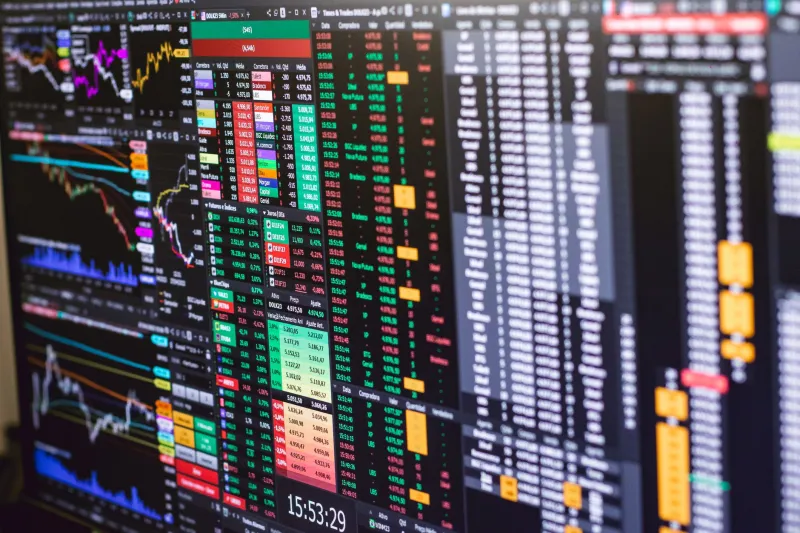
Captive by Design: The Hidden Architecture That Locks You Into Your Brokerage Platform
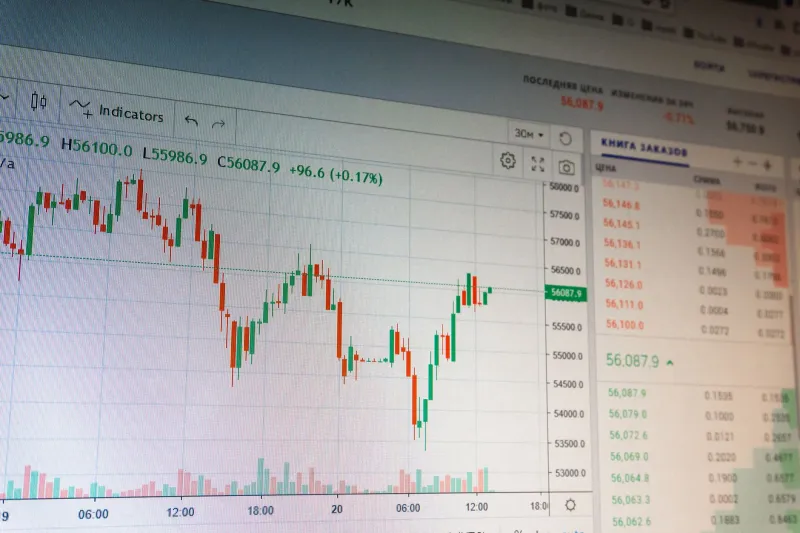
The pitch is almost always the same. A competing brokerage dangles commission-free trades, a superior mobile interface, or a cash transfer bonus—and for a brief moment, switching feels obvious. Then reality intervenes. Your watchlists are trapped in a proprietary format. Your custom screeners cannot be exported. Your two years of annotated charts exist only inside the platform you are trying to leave. Suddenly, "obvious" becomes complicated, and the broker you intended to leave breathes easier.
This is not accidental. The friction you encounter when attempting to switch brokerages is, in many cases, the product of deliberate design decisions. Understanding how that architecture works—and what it quietly costs you—is essential before committing capital, data, and habits to any platform for the long term.
The Anatomy of Artificial Switching Costs
Economists distinguish between natural switching costs, which arise from genuine complexity, and artificial ones, which are engineered to discourage departure. In financial services, the two are frequently blended so thoroughly that clients cannot tell them apart.
Natural switching costs are real. Transferring a brokerage account through the Automated Customer Account Transfer Service (ACATS) can take seven to ten business days under normal conditions, and certain asset classes—options positions, thinly traded securities, and some mutual funds—may require liquidation rather than in-kind transfer. These are structural realities of the settlement ecosystem, not broker inventions.
Artificial switching costs, however, are a different matter entirely. They are embedded in platform design, data ownership policies, and the way features are bundled to maximize dependency rather than utility.
Proprietary Tools as Strategic Anchors
Advanced charting suites, backtesting engines, and algorithmic order builders are among the most powerful retention tools a brokerage can deploy—not because they are necessarily superior to third-party alternatives, but because they accumulate user-specific configurations that cannot travel.
Consider a trader who has spent eighteen months constructing a multi-condition screener inside a broker's native platform. Every filter, every threshold, every saved alert represents invested time. When that trader evaluates a competing platform with objectively better execution quality, the psychological calculus is distorted by what behavioral economists call the endowment effect: the tendency to overvalue what we already possess simply because we possess it.
Brokers understand this dynamic intimately. Platform development roadmaps at major retail brokerages frequently prioritize features that increase "stickiness"—industry jargon for the degree to which a client's workflow becomes inseparable from the platform itself. The goal is not merely to attract users but to make departure feel like starting over.
The Data Portability Problem
In an era when financial data portability is increasingly discussed at the regulatory level, the practical reality for retail investors remains frustrating. Most major US brokerages permit clients to download transaction histories in CSV or PDF format, but this satisfies only the most basic audit need. The richer data layer—trade journals, performance attribution breakdowns, tax-lot assignments with cost-basis notes, and custom portfolio groupings—typically lives inside proprietary systems with no standardized export pathway.
This matters because sophisticated investors use that data to make forward-looking decisions. When it cannot be cleanly migrated, the effective cost of switching is not just logistical inconvenience; it is the loss of analytical continuity. A portfolio manager who has tracked sector-level performance attribution for three years faces a genuine informational setback when moving to a new platform that cannot ingest that history in a usable form.
The irony is that the data belongs to the client. But possession and ownership are not the same thing when the format is proprietary and the export options are deliberately limited.
UX Design as a Retention Mechanism
User experience design is perhaps the subtlest dimension of platform lock-in. Brokerages invest heavily in what interface designers call "habituation"—the process by which repeated interaction makes a particular workflow feel natural, even inevitable. After months of navigating the same menu structures, the same order ticket layout, and the same dashboard hierarchy, a competing platform's interface feels disorienting regardless of its objective quality.
This is not a flaw in human cognition that brokers exploit cynically. But it is a reality that should inform how investors evaluate switching decisions. The discomfort of learning a new interface is temporary and measurable; the cost of inferior execution quality or higher effective spreads compounds indefinitely.
Some platforms also use dark patterns—interface choices that nudge users toward staying rather than leaving. Account closure pathways may be buried under multiple menus. Transfer initiation forms may require phone verification during limited business hours. Retention-focused customer service scripts may introduce doubt about competitor reliability at precisely the moment a client is most committed to leaving.
Evaluating Platform Dependency Before You Commit
The most effective defense against artificial lock-in is a pre-commitment audit conducted before a platform becomes deeply embedded in your workflow. Investors evaluating any brokerage should ask a specific set of questions that go beyond the standard fee comparison.
First, what data can you export and in what formats? A platform that provides only PDF statements is making a choice about your data independence. Second, are the analytical tools you intend to use proprietary, or do they integrate with industry-standard third-party applications? Third, what is the platform's ACATS track record? Transfer timelines and dispute rates are not prominently advertised, but they are obtainable through FINRA BrokerCheck and client reviews on financial forums.
Fourth, and perhaps most importantly, what is the platform's policy on in-kind transfers for the specific asset classes you hold? A brokerage that cannot transfer certain ETFs or fixed-income instruments in kind is effectively imposing a liquidation tax on your eventual departure—a cost that may not appear in any fee schedule.
The Execution Quality Blind Spot
The most consequential dimension of the broker switching decision is often the least visible: execution quality. Transfer fees are a one-time, calculable expense. The cost of consistently inferior order execution—wider effective spreads, slower fill times, higher rates of partial fills—accumulates on every single trade for as long as you remain on the platform.
Retail investors frequently underweight this factor because execution quality is difficult to observe in real time. Price improvement statistics, order routing disclosures under SEC Rule 606, and fill rate data are publicly available but rarely examined. A platform that charges nothing in commissions but routes orders in ways that consistently deliver suboptimal fills may be more expensive in aggregate than a platform with modest per-trade fees and demonstrably superior execution.
The switching trap, in its most complete form, is the combination of visible exit costs and invisible staying costs. Brokers benefit when clients focus exclusively on the former.
Maintaining Strategic Platform Independence
The appropriate response to engineered lock-in is not reflexive platform-hopping, which carries its own costs and disruptions. It is a disciplined, periodic reassessment of whether the platform you use continues to serve your financial objectives—or whether accumulated inertia has quietly become the primary reason you remain.
At ExBroker Group, the principle of precision extends beyond trade execution to the structural decisions that shape long-term outcomes. Platform selection is one of those decisions. Approached with the same rigor applied to security selection or risk management, it becomes a source of genuine competitive advantage rather than a default choice made once and never revisited.
The broker that makes it hardest to leave is not necessarily the broker that serves you best. Understanding the difference is among the more valuable distinctions a serious investor can develop.